A conversation with Arq.º Paulo Tormenta Pinto
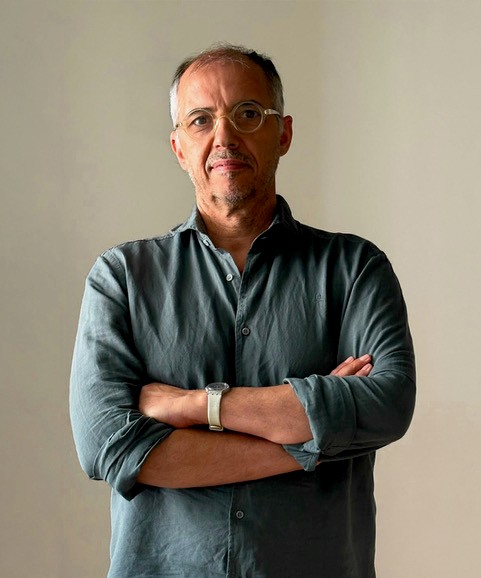
A conversation with Arq.º Paulo Tormenta Pinto
'We received the news [of the National Urban Rehabilitation Award] with great satisfaction. (…) We arrived at a fragmented site with a project that required us to [engage with a structure from the 1950s] and heal fractures'
Could you tell us about the most recent award received by a Domitianus project: the Ramalde Sports Park, which won the “Best Intervention in the City of Porto” award as part of the 2026 National Urban Rehabilitation Awards?
Naturally, we received the news with great satisfaction. We had high expectations for this project because it is located within an intervention area related to a development from the 1950s by architect Fernando Távora, a residential complex where the creation of a sports park had originally been planned but was never implemented. In the late 1960s, the site was transformed through a more substantial intervention and, as a result, we encountered a fragmented territory. The project therefore faced the challenge of fitting into that setting while reconciling those fractures.
The most distinctive feature of the building is the covered stand for spectators, which was ultimately treated as a kind of veranda. When you arrive, it almost feels as though you are in a house open to the surrounding landscape. It consists of a dual-pitched cantilevered roof with a complex structural design developed by Engineer Miguel Villar, featuring a central line of columns supporting a prestressed beam from which the delicate roof wings are suspended. It is a discreet project with carefully balanced proportions and dimensions, so receiving the award was extremely rewarding.
This was another project carried out with Betar. What qualities do you find in Betar that have earned your trust for so many years?
We have worked exclusively with Betar from 2007-2008 because there is a strong sense of mutual understanding, together with two very important factors. On the one hand, there is their willingness to embrace innovation, of which this project is a clear example. On the other hand, there is the rigor and reliability they bring. Trusting the engineering disciplines is essential, particularly structural engineering, which is often the most critical aspect of a project. In the construction process, the structures are the first elements to be executed, setting the course for everything that follows. That phase must run smoothly for all subsequent stages to proceed successfully.
Artes&Letras interviewed you in October 2019. Seven years later, how would you describe the evolution of the practice?
At that time, we were involved in several housing rehabilitation projects in Porto’s historic center, which are now nearing completion. It was a very interesting period, especially because the area is a UNESCO World Heritage Site and presented several challenges. Since then, our practice has worked primarily on public-sector projects, meaning that our development has been closely linked to the country’s economic context and the various public programs that have been introduced.
We have collaborated extensively with municipalities, particularly Porto, Tomar and Lisbon. We are currently developing another sports facility in Porto, also in partnership with Betar: Campo da Ervilha, for Clube de Futebol da Foz. We are now reaching the end of a chapter with the conclusion of the Recovery and Resilience Plan (RRP), and although we are waiting to see what comes next, we still have ongoing work to complete.
Alongside your work as an architect, you are also a researcher, a Full Professor, and Director of a Research Centre at ISCTE. How do all these roles come together?
My academic work is particularly interesting because, in the context of public-sector projects, it provides a deeper understanding of how cities are transformed. The academic dimension complements direct experience with stakeholders, regulatory challenges and the organizational structures of public services. In essence, issues discussed from an academic perspective find, in architectural practice, a means of understanding social and territorial change.
For example, one of the first projects we completed with Betar involved the rehabilitation of public space in Bairro do Lagarteiro, a peripheral district of Porto. Much of the tension between the city center and the outskirts, as well as policies aimed at integrating so-called critical neighborhoods, played out there, allowing us to gain a strong understanding of those dynamics.
More recent projects in the historic center have enabled us to better understand the processes of urban gentrification, the role of tourism, and the challenges faced by long-term residents in remaining in their neighborhoods. It is important to bring these discussions into academia, and equally valuable to bring more scientific and theoretical knowledge into real-world practice.
Let us talk about a current issue: the shortage of housing and the fact that housing has become unaffordable for many people.
In this matter, there is a clear point of consensus: the need to expand the public housing stock, particularly in places where the housing crisis is most evident, namely major urban centers such as Lisbon and Porto, as well as areas experiencing intense tourism pressure, such as the Algarve and Funchal.
There has been insufficient investment in residential urban development, which would also allow us to rethink local facilities, transport networks and a range of support services. The lack of such investment ultimately leads to the weakening of the city itself.
What do you hope for the future of Domitianus?
We are a small-scale organization, and we wish to remain at this scale. We aim to build on the reputation earned through the awards and distinctions we have received, continuing to be seen as a credible practice capable of meeting the challenges ahead. And we count on Betar as a fundamental partner in that journey.
This interview is an integral part of Artes&Letras magazine #191, august 2026
Partially automatic translation from portuguese: some expressions may differ from their actual meaning.
News & Interviews
A conversation with Eng. Guilherme Duarte
'My desire is to stay in Africa because contributing to this structural change is priceless. It is not about telling the story, but being part of it.' Read more
A conversation with Arch. Carlos Ribas
'The principles of sustainability have always been those of landscape architecture [...] The national circumstance of having "specialist" professions that understand nothing about the territory means that we have a growing dehumanization of the landscape and a very strong dynamic of unsustainability' Read more
A conversation with Arq.º Andreas Mörschel
'My projects are all different; I let myself be influenced by the place, the setting, the program, the needs, and the objectives. Doing different things isn't boring' Read more

