A conversation with Arq.º Andreas Mörschel
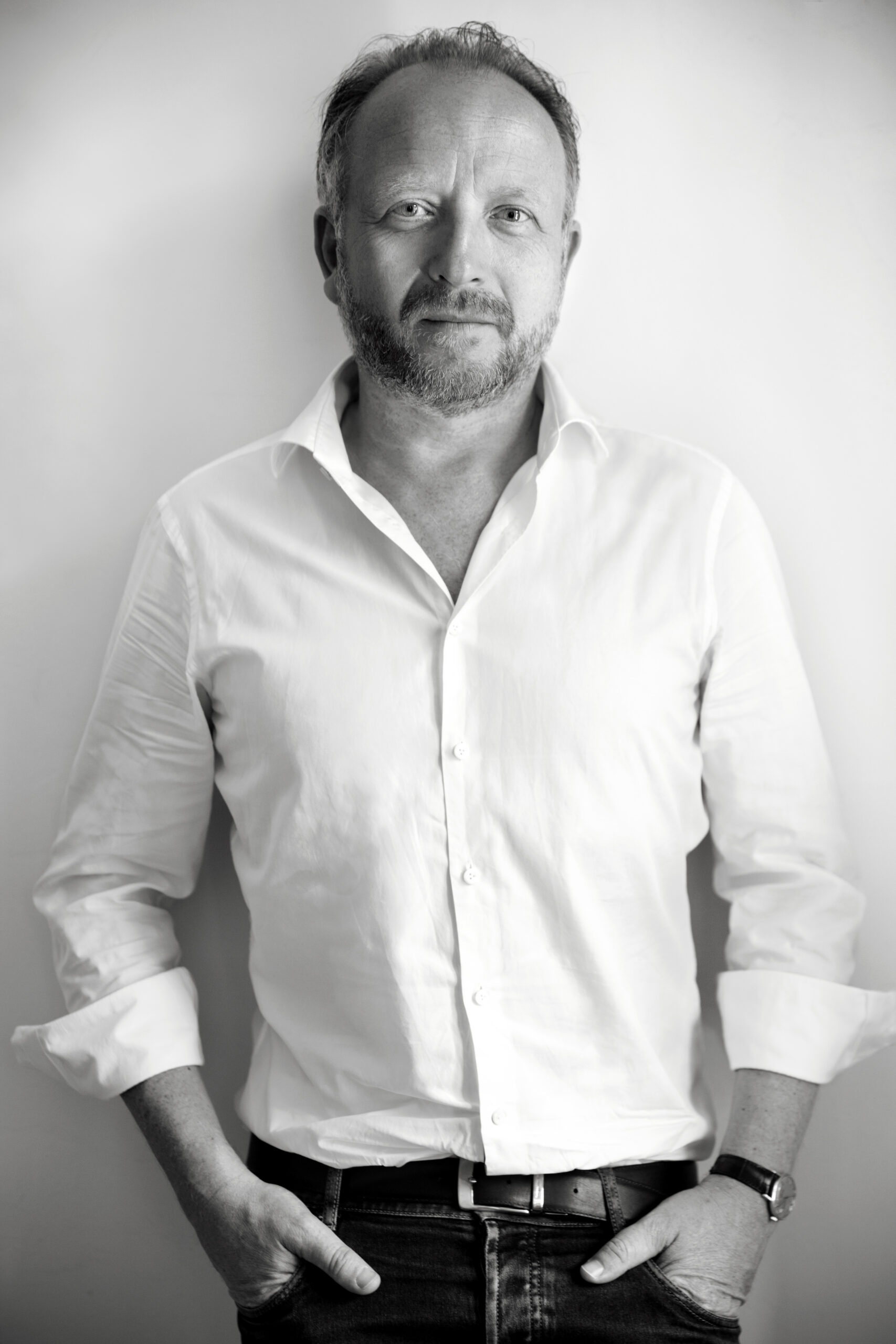
A conversation with Arq.º Andreas Mörschel
'My projects are all different; I let myself be influenced by the place, the setting, the program, the needs, and the objectives. Doing different things isn't boring'
You are German, but your practice is rooted in Lisbon. How did that happen?
My training began in Stuttgart, in an environment strongly marked by the classical connection between project conception and the construction system. Then I had a crucial period at FAUP (Faculty of Architecture of the University of Porto), where the essential language of design was drawing. Portugal became my professional base in the late 1990s, and in 2009 I founded Mörschel Arquitectos in Lisbon. This combination, method and precision, with urban intelligence and contextual awareness, continues to be the foundation of our work.
How would you define your way of thinking about and doing architecture?
We do architecture for demanding and very diverse contexts, both in terms of typology and architectural language: a hospital, a sports pavilion, a house in a sensitive landscape, a rehabilitation project in a listed building, a hotel with international brand requirements.
Our approach depends as much on the design as on the control of the process. We are focused on combining architectural ambition, technical discipline and coordination capacity down to the construction detail.
Today, there’s a lot of talk about “concept.” In practice, what is your starting point?
Our obsession is clarity: spatial, constructive, and decisional. A concept that doesn’t withstand these different layers and constraints isn’t architecture; it’s just a concept. Our job is to transform these constraints into a clear, coherent, and executable solution, and to ensure that the constructed building maintains the intention and quality that were present at the beginning.
Our “style” is method: reading the problem well, making decisions early, and coordinating rigorously so that the constructed result lives up to what was promised: from structuring decisions, who decides what and when; through the articulation of the different stakeholders, architecture/engineering/interiors/operator; to documentation and disciplined review.
It’s not glamour; it’s technical management. But that’s what protects architecture.
Give a concrete example of a design decision that changes everything.
At the João Rocha Pavilion, the decision was to reduce noise and focus on the essentials: the game as a spectacle. This led to a very controlled spatial and material strategy, less visual distraction, and more concentration on the experience of the field and the stands. This type of simple, yet radical decision creates coherence and reduces error throughout the entire development process.
Can you give an example of a “low-profile” decision that has a huge impact, especially in the hotel industry?
The technical distribution strategy and the operational logic. How are the main routes resolved, how are the infrastructures secured without “crushing” the ceiling height, the sound insulation, the access for maintenance without entering sensitive areas, the organization of the back-of-house. These are not photogenic topics, but they are what define the guest experience, the operator’s efficiency, and the durability of the investment. Serious architecture starts there.
Before hotel projects, you were involved in large hospital PPPs. How did this opportunity arise and what impact did it have on your career in Lisbon?
In 2004, I received an invitation to join a consortium within the scope of hospital PPPs (Cascais, Braga, Vila Franca de Xira and Loures) with consultancy from HOK. The promoter had a clear ambition to develop benchmark projects, and the process was conducted with a strong research component, involving a multidisciplinary team of doctors, engineers, architects and specialists: Design follows function. We won two tenders, the Braga Hospital and the Vila Franca de Xira Hospital.
You work with highly design-oriented international teams, especially in interiors. What is demanding about this type of collaboration?
Demanding is transforming vision into reality without loss and without conflict between disciplines. When we collaborate with studios like Patricia Urquiola, Lázaro Rosa-Violán, or Jacques Grange, our role is to protect the design intent while simultaneously making it compatible with structure, MEP, fire safety, acoustics, operator requirements, and the constraints of the existing building. In the end, the client doesn’t evaluate “the concept”: they evaluate the built result, the daily operation, and the quality that is maintained over time.
What is the role of engineering in what you call “architecture with control”?
Engineering is part of the architectural outcome. In dense contexts and in rehabilitation projects, what seems like detail—loads, reinforcements, technical passages, compatibility with existing elements, phasing of work—determines what is possible. A good relationship between architecture and engineering creates freedom because it reduces uncertainty and increases control. When coordination is rigorous, the architecture can be clearer and more ambitious, precisely because it rests on a solid technical foundation.
How do you see the future of the studio?
We don’t grow to appear bigger. We grow when there is a pipeline and when we can maintain quality and control. We prefer organic and sustainable growth: more capacity, more methods, and better projects, without losing discipline.
This interview is an integral part of Artes&Letras magazine #185, february 2026
Partially automatic translation from portuguese: some expressions may differ from their actual meaning.
News & Interviews
A conversation with Arch. Pedro Ricciardi
'The studio's philosophy is to create spaces that are [...] functional and timeless. Each project is unique and different, with no set formulas. A continuous exercise in discovery, in search of creative solutions' Read more
Talking about Eng. António Rocha Cabral
This year will be marked by António Rocha Cabral's farewell and we couldn't help but pay tribute to him. In this interview, Maria do Carmo Viera tells us about Mr. Cabral, undeniably one of BETAR's most important figures. Read more
A conversation with Eng. Melvin Xavier
'Despite the recurring damage created by natural disasters, the transport sector is one of those that has managed to stay on course for development, with the major challenge being the maintenance of infrastructure' Read more

