A conversation with Arqº João Santa-Rita
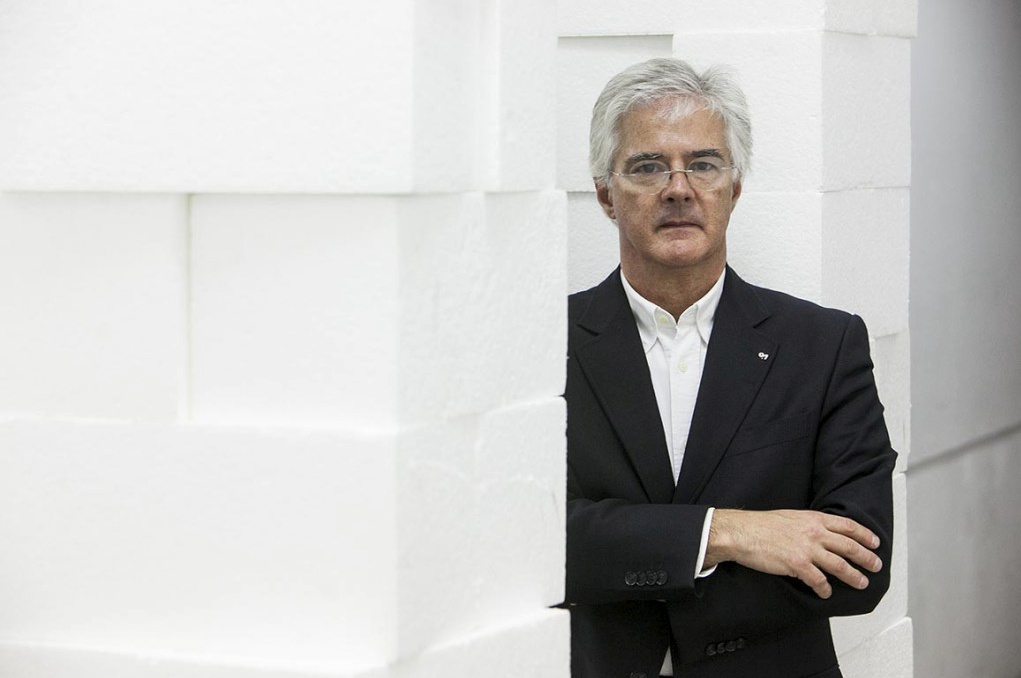
A conversation with Arqº João Santa-Rita
'Designing a home for people in need—people who will (…) say with pride, “That is my home”—carries immense power. (…) Realizing that our actions can have a truly significant influence on the lives of others'
I’d like you to start by talking a little about your early career path.
I had two main influences. One was Helena Cid dos Santos—a close friend of my parents—who used to take me to visit museums and palaces when I was about five or six years old. Perhaps that early exposure to such varied spaces played a role. Then, obviously, there was my father, especially since I started working with him at a very young age. But I did consider zoology at one point, because I had an uncle who was a veterinarian, and I even thought about becoming a sailor because of ships. I used to spend afternoons at the Maritime Museum drawing ships; I was fascinated by their interiors, that efficient design approach of fitting the maximum amount into the minimum space. I could have become a naval architect, but since I wasn’t accepted into the armed forces, I couldn’t enter the Naval Academy. With that option off the table, I turned to architecture. I spent my first year in Porto, where I had excellent mentors, such as Professors Sérgio Fernandes, Alexandre Alves Costa, Fernando Távora, and Luísa Brandão, before moving to Lisbon. After finishing my degree, I worked with my father and, sporadically, with other architects; later, I went to Macau to work with the architect Manuel Vicente. When I returned, my father and I set up a practice together. However, my father passed away in 2001, and for nearly two decades after that, I ran a practice on my own. Eventually, I joined forces with some colleagues I had long collaborated with, and we naturally formed the firm Santa-Rita e Associados.
You also helped establish the Architecture program at the Universidade Autónoma de Lisboa. Tell us about your teaching career and how things have changed from the beginning to the present.
When I graduated in 1983, Professor Carlos Duarte invited me to serve as a teaching assistant for the fifth-year class at the Lisbon School of Architecture. Years later, when the Autónoma program was being established, I was tasked—alongside the Architecture program directors—with designing the Construction and Technology curriculum for the entire five-year course. Later on, around 2011, I also began teaching the Design Studio course. When I started teaching at Autónoma, I realized I needed to delve deeper into the subject matter and the outcomes of the courses I taught. Back when I was a student, most of us worked in architectural firms, which served as a complement to our formal education. Today, however, education needs to be more rigorous and in-depth, as it is the primary means of transmitting and experimenting with knowledge.
Between 2014 and 2016, you served as President of the Order of Architects. What stands out to you about that period?
There is a lot of criticism regarding professional orders, but I believe the world would be worse off without them. The Order of Architects strives for architectural quality; its existence is both beneficial and necessary. For one thing, it brings professionals together to discuss issues and reflect collectively, fostering a much more comprehensive and informed worldview as well as connections with other countries. I have always been closely involved with the Order, and during my presidency, I appreciated dealing with matters I had previously been removed from, specifically, the relationship with state institutions. We went through a difficult time, Troika was here, and we were forced to take certain measures, but it also gave us the opportunity to reflect on the changes that needed to be made.
What values currently guide Santa-Rita e Associados?
Santa-Rita e Associados grew out of existing collaborations. We share a close, personal approach to architecture. Naturally, things evolve; we refine our work and seek to respond to new demands. Architecture is not static; it is subject to changing needs. For instance, in recent years, and even more so following the pandemic, balconies have become far more significant than before. There is one crucial aspect we always prioritize at the studio: ensuring our solutions are deeply rooted in their specific locations and contexts. It is vital to understand the significance of every element placed within a space and how it contributes to enhancing that space. Should the building be calm and quiet, or more inviting? I also believe that, in Portugal, we possess a significant territorial heritage. These places are complex; the topography is rugged, the landscapes are diverse, and all of this is reflected in our work. At the studio, we strive to take this complexity, and the way everything intertwines, into account. The existing conditions and legacies we encounter prompt us to reflect on how best to approach each project.
Any standout memories?
We recently completed an affordable rental housing project for the Oeiras City Council under the PRR (Recovery and Resilience Plan), and we attended the ceremony where the keys were handed over to the new residents. I must say that was the first time I truly felt the immense significance of the architect’s role. Designing a home for people in need—homes where they will form a bond with the building and proudly say, “That is my home”—carries tremendous power. That ceremony moved me deeply; realizing that our actions can have such a significant impact on other people’s lives.
This interview is an integral part of Artes&Letras magazine #193, october 2026
Partially automatic translation from portuguese: some expressions may differ from their actual meaning.
News & Interviews
A conversation with Arch. Tomás Rebelo de Andrade
"The cyclical crises that have been occurring have made very large dents, difficult to compensate for in the wealthy times, which are also cyclical and lead invariably to the next crisis". Read more
A conversation with Arch. Flávio Tirone
We have a triangle of priorities: the public, the artists and the technicians. We made it our mission to ensure that no colleague, artist or stage technician had to step on a stage in bad condition Read more
A conversation with Eng. João Loureiro
'There is a unique space in Lisbon that aims to disseminate contemporary art and make it reach more people.' Read more

