A conversation with Eng. Fauzi Nacfur Junior

A conversation with Eng. Fauzi Nacfur Junior
'More sustainable and efficient management models, tested in other countries, are a source of inspiration for solving maintenance, safety and traffic problems on Brazilian highways. International cooperation also enables strategic partnerships'
What is ABDER and what is its main mission in relation to the DERs (Highway Departments)?
The Brazilian Association of State Highway Departments (ABDER) is a civil entity, with legal personality, non-profit, with administrative, financial and patrimonial autonomy. Its main mission is to promote the integration, institutional strengthening and technical-operational development of the DERs, in addition to fostering cooperation between the states and the Union in the formulation of public policies aimed at transportation infrastructure, especially road transport.
Road infrastructure reflects development and has a direct impact on the country’s economy. How does ABDER try to ensure the quality of Brazilian roads?
ABDER promotes training and technical development for professionals from DERs and road agencies through courses, seminars, workshops and technical conferences. It is worth highlighting the National Road Conservation Meeting (ENACOR), an annual event that is in its 27th edition.
The association promotes the exchange of good practices between states, encouraging the sharing of experiences and technical solutions among DERs from different Brazilian states. It carries out political and institutional coordination work with the federal government and other decision-making bodies to seek more investments for the maintenance and expansion of the road network. Finally, it encourages innovation through the adoption of new technologies and methodologies applied to road engineering.
With the work developed by ABDER, is Brazil closer to having a National Transportation Policy? How important is it to expand the scope of internal discussions about common problems?
Regarding the formulation of National Transportation Policies, ABDER clarifies that it is not its responsibility to formulate such policies, and that it is the responsibility of the Ministry of Transportation to formulate such policies.
Due to the territorial size of the country, transportation policies in Brazil are divided between the federal, state and municipal levels, each of which has its own responsibility and area of activity. The Union is responsible for establishing general guidelines, the states are responsible for managing intercity transportation, and the cities are responsible for planning and implementing urban mobility.
Whenever called upon to participate in debates, ABDER makes a point of being present and contributing to its duties.
Brazil is such a large and diverse country. It is important to present alternatives for different management models. While it is essential to aggregate the different DERs and standardize them, is it necessary to decentralize management and operations?
Given the continental dimensions of our country, the different climatic and geological conditions, the different regions and socioeconomic realities, it is crucial to seek personalized alternatives that are targeted to each of these realities. Because ABDER has in-depth knowledge of each of these realities, it plays a strategic role in seeking to disseminate knowledge and apply, whenever possible, the success stories of one location to another.
Another of ABDER’s functions is to represent the DERs before international bodies and partners, to promote an exchange of knowledge. BETAR is one of ABDER’s associates and regularly participates in its events. How can the experience of other management models contribute to solving the problems of Brazilian roads, given the rapid advances in methodologies and techniques?
Exchanges with international entities, such as BETAR, are essential for the continuous improvement of the management of Brazilian highways. Technological innovations and new management methodologies can be applied in the Brazilian context, adjusted to its specificities.
Just as BETAR’s partnership is of great value to Brazil, the Brazilian experience can also contribute significantly to the countries that are part of the Community of Portuguese-Speaking Countries (CPLP).
More sustainable and efficient management models, tested in other countries, are a source of inspiration for solving maintenance, safety and traffic problems on Brazilian highways. International cooperation also enables strategic partnerships that contribute to the modernization of the country’s road infrastructure.
Last May, ABDER participated in the 11th Portuguese Road and Rail Congress (CRP), held in Lisbon, where it signed a Technical Cooperation Agreement, with a term scheduled for 2025 to 2028. What is the objective of this new commitment?
This year, on the 11th CRP, in which we renewed the technical cooperation agreement once again, we strengthened the objective and mutual commitment to strengthen the exchange of technical knowledge and good institutional practices between Brazil and Portugal, as well as with all entities of the Community of Portuguese Speaking Countries (CPLP).
This interview is an integral part of Revista Artes & Letras #178, july 2025
Partially automatic translation from portuguese: some expressions may differ from their actual meaning.
News & Interviews
A conversation with Arch. Miguel Arruda
‘The increase in tourism is an asset in building recovery, but it would also be a good opportunity for the implementation of new housing for former residents’ Read more
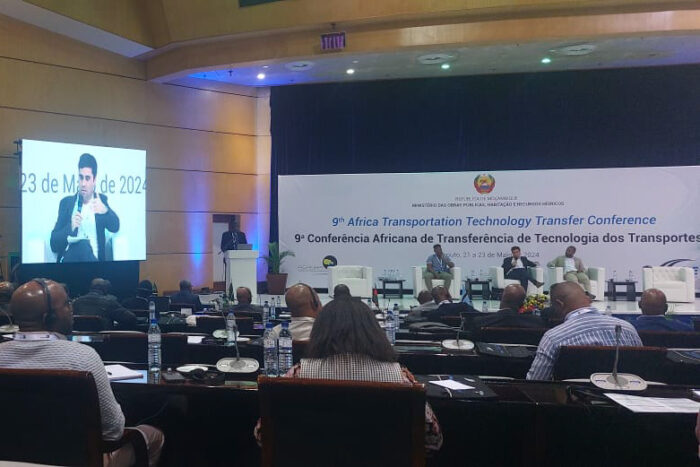
9th African Transport Technology Transfer Conference
Betar took part in the event with the theme ‘GOA - Reshaping Bridge Management with AI, 3D tools and BIM’ Read more

A conversation with Engº Luís Garcia Ribeiro
'The daily challenge of planning and producing a quality offer for a galloping demand (...) relates to the ability to guarantee the reliability and attractiveness of the transport system' Read more

