A conversation with Engº Rui Guimarães
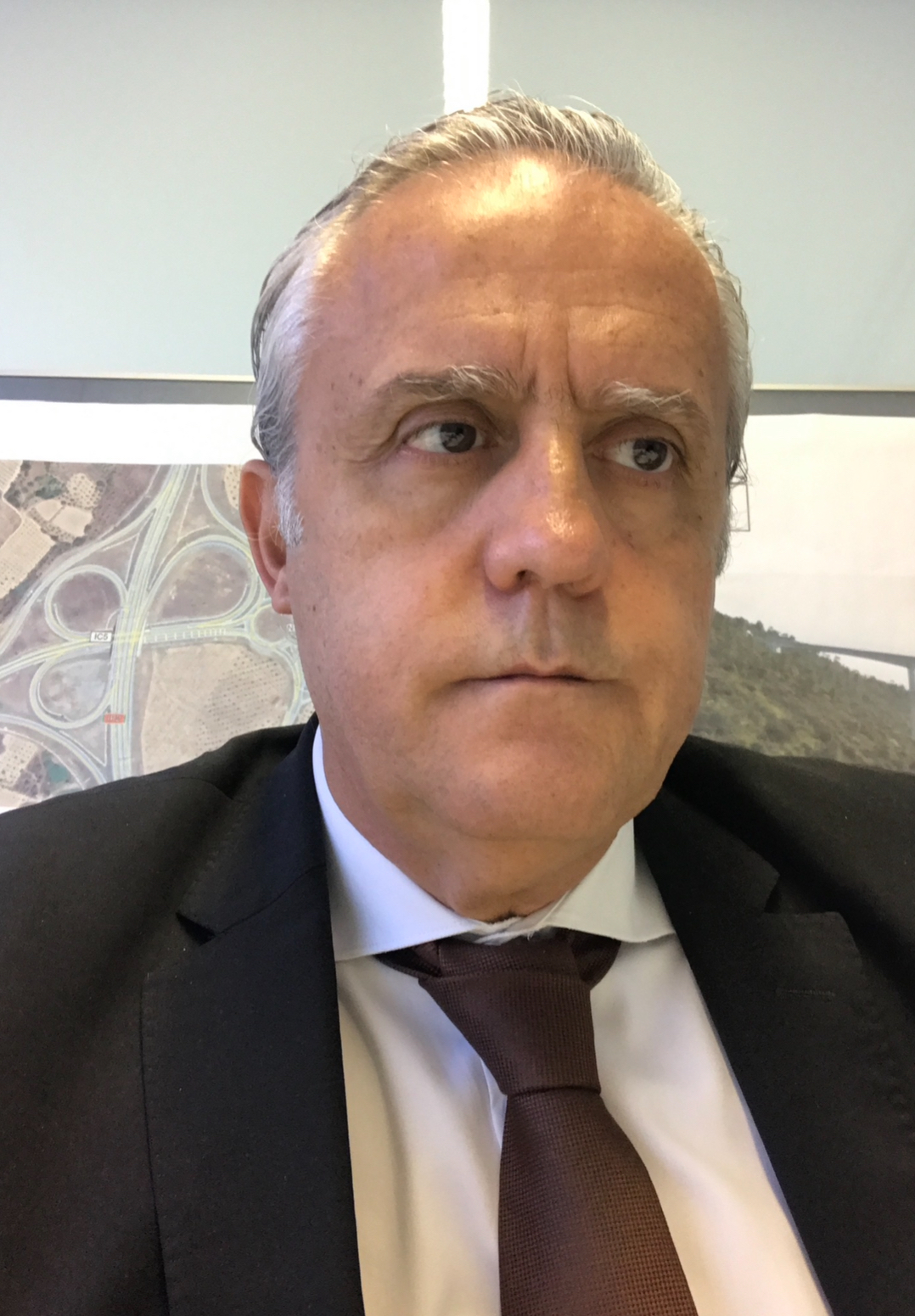
A conversation with Engº Rui Guimarães
'I'm sure we are going to do a great job with the High-Speed Train (...) These are Portuguese engineering and construction companies that are going to develop the project and they certainly (...) have all the necessary ingredients to take a project like this take a project like this forward'
To get to know you better, tell us about how you began your professional career.
I started working at Mota-Engil, then Mota & Companhia, in 1992, in the Planning department. I had contact with all the company’s construction sites, since my job was to prepare the internal budget with each of the site managers. It was a kind of course, with different specialties, with people who knew as much as possible about each topic. Roads, tunnels, hydroelectric power stations, buildings, harbors, you name it, it was very enriching. I also worked for a short time on the construction of the A3 motorway, on the Cruz-Braga section. In 1997, I was invited to join a new area of special projects: Road Concessions. That’s where I met engineers Paulo Gomes and Tiago Mendonça. We were awarded the Northern Concession. At the time, I turned up in Lisbon from the north with a few sheets of paper to talk to Paulo Gomes, who was already a great road specialist, and said “I’ve got some ideas here”. He must have thought “where did this guy come from?”. Then we realized that some of the drawings made sense. Since then, we’ve had a very good professional relationship, as well as a great friendship. It’s been 13 very intense years, several concessions, where we’ve always found solutions that allow us to optimize. Design-building is very important in infrastructure, especially for those who pay, because it allows us to provide cost-benefit logic from the outset.
After that, you were CEO of Mota-Engil Peru. What was that experience like?
In 2009, Mota-Engil invited me to be Country Manager in Peru. When I arrived there, the company, called Translei, did work for mining companies, with a view to renting equipment. I spent four years there. The Peruvian market was very strong in terms of construction, they had very qualified people and quality suppliers, but they had a problem in terms of execution. At some point, we changed the name of Translei to Mota-Engil Perú, to sell the brand, and we went from a company with a turnover of 30 million to, in the last year, a turnover of over 400 million. It was very strong growth, we competed for everything and anything, we became a fully-fledged construction company. After four years, Mota-Engil asked me to go back to Portugal, but my family was really enjoying living in Peru, and we decided to stay. I had never worked for another company, but I went to an Argentinian company specializing in airports. I ended up setting up a construction company to collaborate with them, particularly on Cusco airport, which was also a very enriching experience. Then, following some political madness, the concession was taken away from the investors and I had to close the company. I continued to work in Peru, for a world leader in cable cars, until I thought it was time to return to Portugal. I returned to Mota-Engil at the time of the Douro Interior Concession and have remained here to this day. I am a director of Lusoponte and Mota-Engil Concessões, among others.
Let’s talk about the High-Speed Railway, one of the biggest railway projects Portugal has ever seen. How important is it for the country that a national consortium wins the first tender?
We won the first section, Porto-Oiã, Oiã-Soure didn’t go so well, we were excluded because we submitted a proposal that, from our perspective, met the object of the tender, but the evaluation was different. In fact, to fit in with the maximum price, we had to ‘get our heads round it, following the logic of design-building, and we found a solution that, in our opinion, met the requirements of the tender. In fact, we were the only ones to submit a bid because the other competitors, following the exact reference solution, concluded that it far exceeded the base price. We bid because we came up with a technical solution that met the price limit and was even better in functional terms. Now there’s going to be a new tender, which is a shame because, with the deadlines dragging on, the state is going to lose several hundred thousand euros in EU funds. These are the ups and downs of life, but we have a clear conscience, a sense of mission accomplished, of trying to collaborate with the state and save it many thousands of euros – that’s the engineer’s job, to optimize, to find the best price-quality solution.
Now we’re going to dedicate ourselves to the first section, it’s Portuguese engineering and construction companies that are going to develop the project and that, of course – not least because we have this experience of road concessions – have all the necessary ingredients to take a project like this forward, from the financing to the project, from the negotiating capacity with local authorities and populations to the construction capacity… We’ve been like fish in water since that time, and we’ll certainly do a great job with the High-Speed Train.
This interview is an integral part of Revista Artes & Letras #174, march 2025
Partially automatic translation from portuguese: some expressions may differ from their actual meaning.
News & Interviews
A conversation with Arq.º Paulo Tormenta Pinto
'We received the news [of the National Urban Rehabilitation Award] with great satisfaction. (…) We arrived at a fragmented site with a project that required us to [engage with a structure from the 1950s] and heal fractures' Read more
A conversation with Arch. Steven Evans
'With all the people I've worked with, there's always been one thing in common: how easy it is to laugh. The affinities are workable, but without laughing, it is difficult to be an architect.' Read more
A conversation with Arch. Margarida Silveira Machado e Maria João Gamito Leal
'The studio [of architect Gonçalo Byrne] is a place where there is room to grow, to develop ideas, to surpass ourselves, but it requires great availability and commitment (...) he taught us that you learn a lot from listening to others' Read more

