A conversation with winners of the José Mendonça Prize
A conversation with winners of the José Mendonça Prize
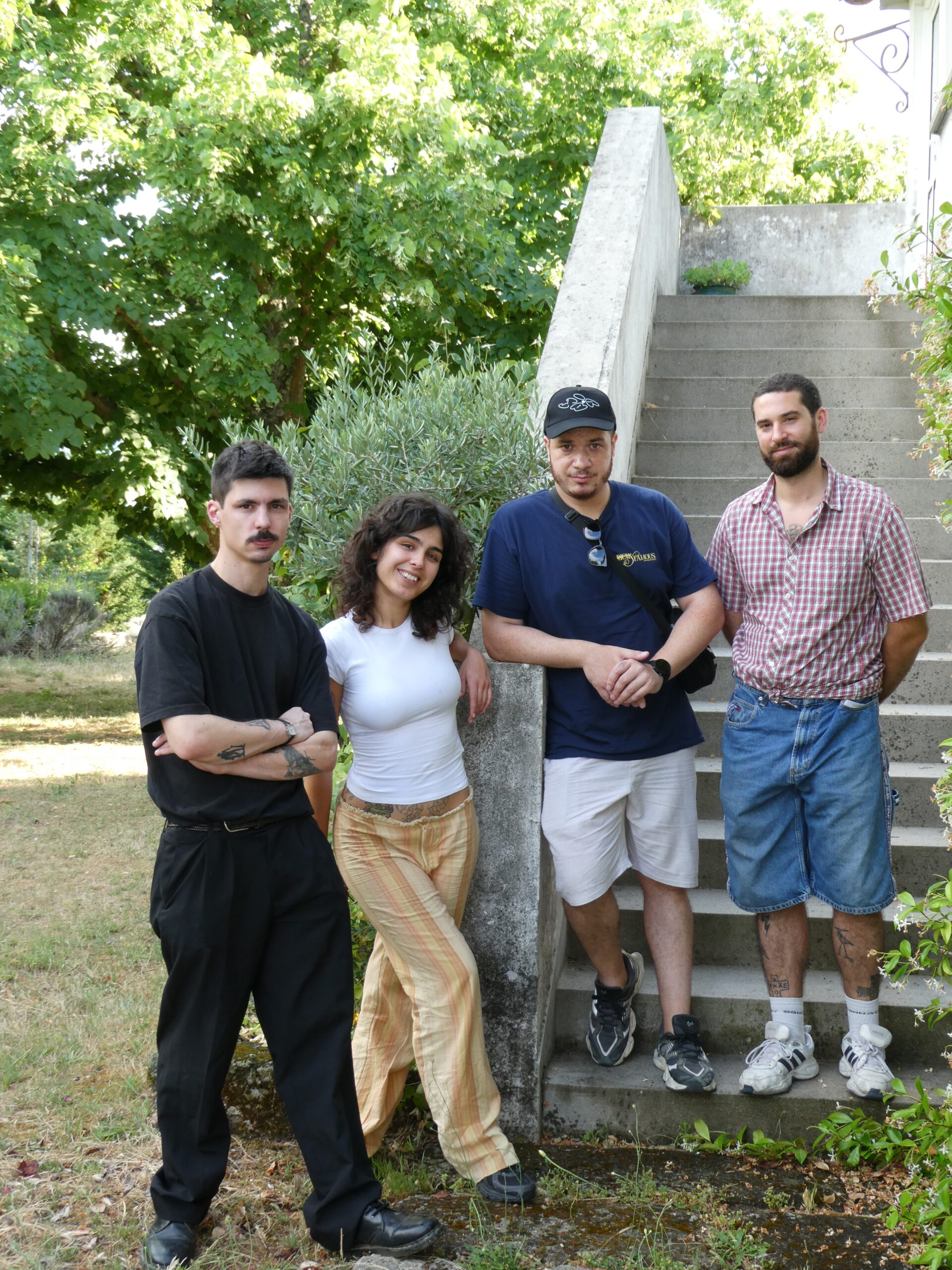
Joana Coelho, Pedro-o-Novo, Renato Pires, and Tomás Toste were the winners of the José Mendonça Prize – Betar’s 2nd Visual Arts Award. In this interview, we get to know them better through questions such as: How did art enter your life? How do you describe your work? What did you think of Betar’s initiative? And is it difficult to be an artist in Portugal?
Joana Coelho
I view art as an epistemological tool for generating knowledge. My sensibilities and interests have always aligned with this way of processing human experience. All my thoughts, feelings, and memories are woven into the way I observe the world. And this means everything to me. I see myself as a conduit between the visible and the invisible. Art is also a language, and to read it, one must be aware of the symbols that surround us.
My work is a tapestry of themes relating to mythology and mysticism, psychology and ecology. I use drawing and painting as vehicles to express sensations, mental landscapes, and narratives I consider relevant to the present day. Nature plays a pivotal role in my research; I view it as an entity of regeneration with which we must reconnect and which we must reinterpret. Images, myths, and codes reveal the realm of the sensible and the invisible.
This initiative is incredibly timely! It is rare to find projects and institutions that truly support artists in the way Betar did – providing everything from accommodation and a warm welcome to production materials, all while offering us creative freedom. There was an opportunity to immerse myself in the hills of Beira Alta and experience time in a different way. Amidst the vineyards and olive groves, the narratives that shaped the creative process began to emerge. For my part, I am deeply grateful for the stay at Quinta de S. Lourenço and for the entire experience.
Being an artist in Portugal is not yet an easy path. We live in a country with an economic infrastructure that fails to provide financial stability for most artists. It is a long journey requiring persistence, discipline, and dedication. That is why opportunities like the one offered by Betar are so special; it is a vital first step.
Pedro-o-Novo
I believe my art emerged from the encouragement of artistic and literary tastes I received at home. I have always drawn, especially during class; it is something of a trademark of mine.
Currently, I am pursuing a “New Romanticism,” inspired by literature and a romantic spirit. I seek to construct a narrative, which requires a setting and a generally recognizable character. My paintings often have a kitsch, fantastical, and illustrative quality, reminiscent of old-style painting. The themes and characters tend to be youthful and/or metaphors for my state of mind or specific personality traits. I have been exploring the concept of “painting within a painting,” based on the premise that painters paint for other painters. The studio, serving as both setting and pictorial subject, becomes an object of devotion, a veneration of the “painting/canvas/painter” archetype. These images act as icons, featuring a formal correspondence between the cross shape and the cross-brace found on the back of the canvases. The drawings surrounding the canvases are sketches and studies of the characters that will inhabit the studio. The subject of these paintings is the story of an easel — a Don Quixote-like figure — that, in this instance, is a wandering easel. Personified, the easel serves as the protagonist. It traverses a country path populated by floating canvases, brushes, and palettes that form part of the landscape. The paintings have a Disney-esque illustrative quality, conveying a narrative akin to a storybook illustration.
I appreciate Betar’s initiative in supporting the creative work of emerging artists. This type of encouragement is crucial for several reasons, such as opportunities for exhibitions and sales. In Betar’s case, the fact that the residency takes place in the municipality of Guarda, culminating in an exhibition at the Municipal Museum, is essential to me because it fosters the decentralization of the visual arts.
As for challenges, one of the most complex is the need to juggle multiple roles; it is common for artists to work in other fields. The market is also relatively small, with fewer buyers and collectors than in other countries. Limited funding, characterized by fierce competition for grants and public support, means that resources are scarce relative to the number of applicants, making it difficult to sustain a career based solely on the domestic market.
Renato Pires
Art entered my life when I was very young, through drawing. My earliest memories are of my brother and the drawings he made in his school notebooks. I began to imitate him out of admiration. Naturally, I gradually incorporated this practice more and more into my own reality and form of expression.
Right now, art represents my observations of everyday life. It is the event itself that truly inspires me. Sometimes, lately, quite often, existence alone is enough: the space, the time, and the things around me.
I think this is a wonderful and important initiative, given the support it provides for artistic practice and painting, and specifically for everyone involved—both in the exhibition itself and in its ongoing development.
For a long time now, my life as an artist has taken a back seat, specifically, ever since college. I started working to support myself, and ever since then, any projects or artistic practice have always come after work.
Tomás Toste
Art, and the act of creating it, emerges at different times and in various contexts throughout my life; it is not a single starting point, but something that arises and becomes necessary at distinct moments. Over time, it has evolved from mere practice into a means of constructing meaning, both in the act of making and in the way of looking.
My work is rooted in figurative painting, using nature as the primary visual realm to explore how we recognize and interpret images. In a context defined by the rapid consumption of imagery, I aim to create paintings that counter this logic, slowing down the gaze and demanding time, uncertainty, and interpretation. Through rapid, expressive gestures, the figures hover in a state of indeterminacy between presence and disappearance, making the viewer an active participant in the construction of the image.
Regarding the José Mendonça Prize, I value the space and visibility it affords painting at a time when the medium is not always prioritized. It offers a significant opportunity for the work to be seen and to engage in dialogue, especially for artists at different stages of their careers, yet sharing a similar level of quality.
Often, the struggle is not so much about “being an artist” in the romantic sense, but rather the challenge of securing the time, conditions, and stability needed to keep producing; the difficulty lies more in survival than in the artistic practice itself.
This interview is an integral part of Artes&Letras magazine #190, july 2026
Partially automatic translation from portuguese: some expressions may differ from their actual meaning.
News & Interviews
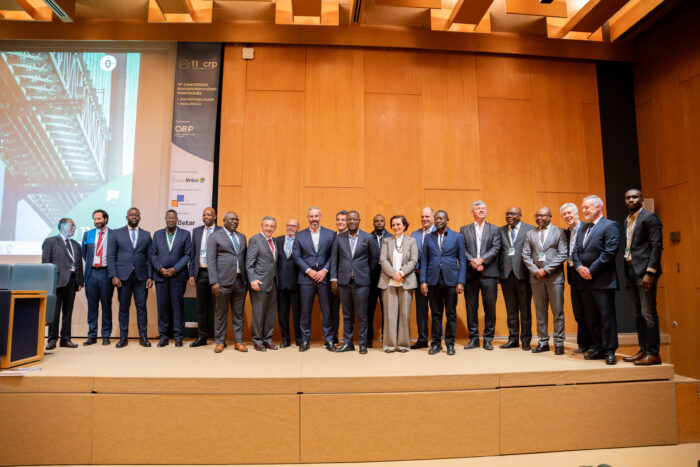
11th CRP – Portuguese Road and Rail Congress
Betar was present at the sessions where the challenges of the Road and Railway Infrastructure sector were discussed Read more
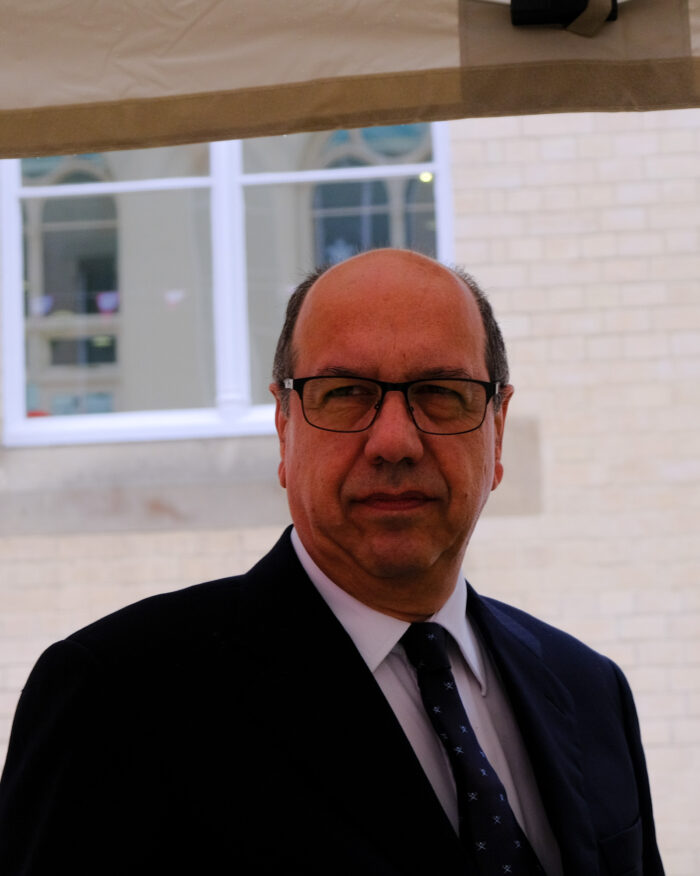
A conversation with Engº Carlos Matos de Pinho
'The variety of work allows me to have a very relevant breadth of knowledge and experience. (...) The diversity of themes is motivating for me because curiosity and constant challenges keep us active, always awakening the need to learn' Read more
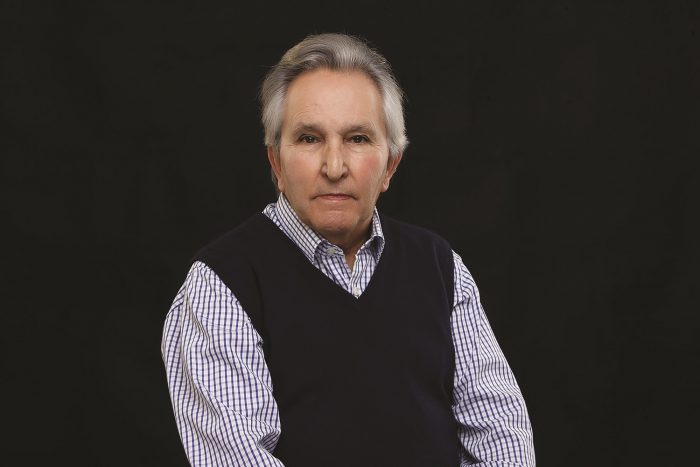
Talking about Eng. António Rocha Cabral
This year will be marked by António Rocha Cabral's farewell and we couldn't help but pay tribute to him. In this interview, Maria do Carmo Viera tells us about Mr. Cabral, undeniably one of BETAR's most important figures. Read more

