A conversation with Arqº Paulo Martins Barata
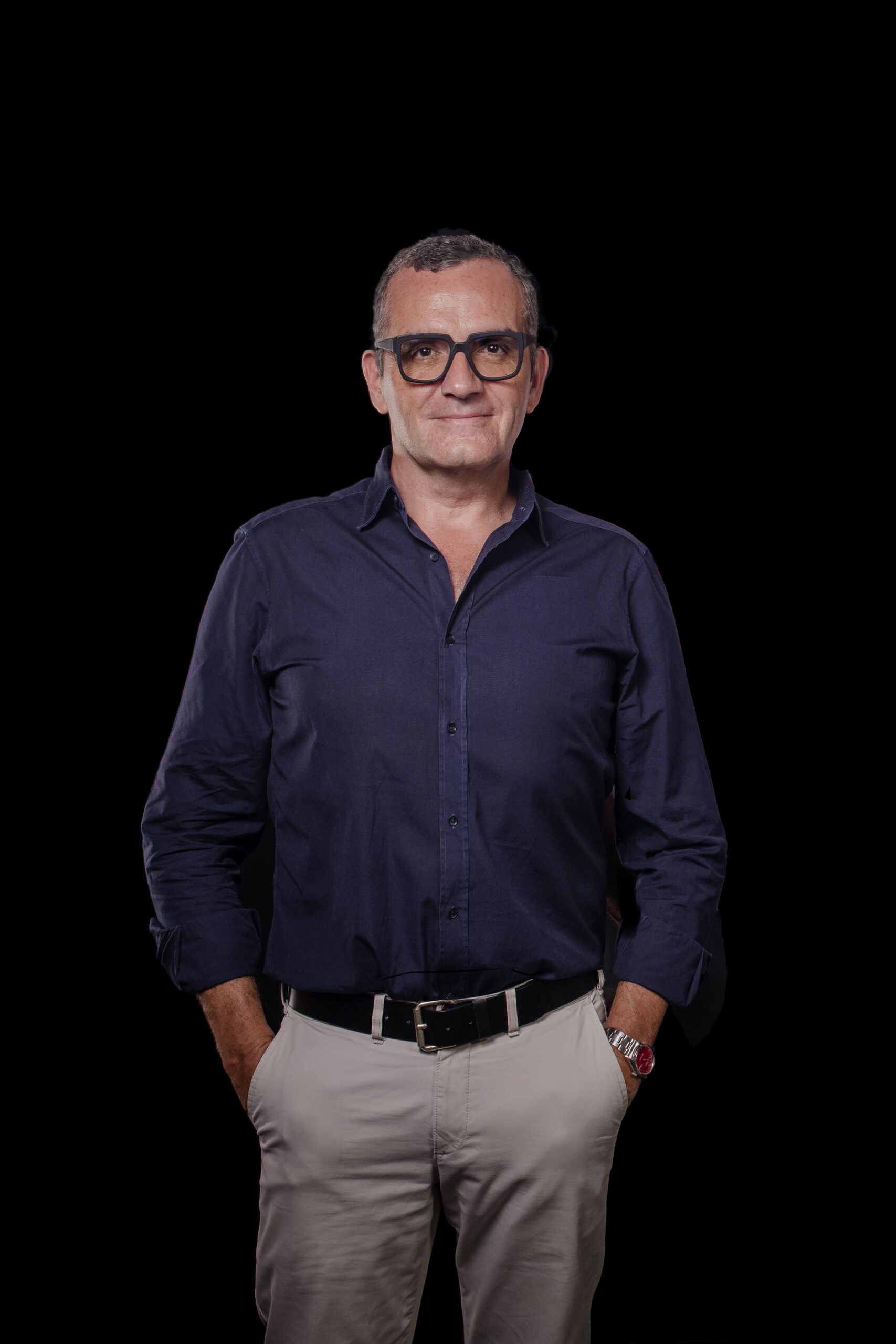
A conversation with Arqº Paulo Martins Barata
'I have always understood a critical and reflective dimension as essential (...) Architecture only relevant to history if it has a critical purpose of transforming of society, the city and the landscape'
You’ve completed your studies abroad, published articles, given lectures… Of all the things you’ve done with the project, what stands out?
I wanted to get to know different places and practices, so in the second year of my degree, in 1983, I went to work in Finland, where I learnt about the work of Aalto and the Nordic classicism of Lewerentz and Asplund. I visited Gorbachev’s USSR and was exposed to all the imagery of Soviet brutalism. When I finished my degree in 1988, I went to Miami to work and decided to apply for an MBA in Edinburgh. I returned to Portugal, where, with my partners, we had founded PROMONTORIO in 1990. Years later, I thought it would be interesting to do a PhD in theory and criticism, and I chose ETH Zurich – on the recommendation of Jacques Herzog – which at the time was a very closed school in the ‘Pangermanic’ world. I was the first Portuguese doctoral student in architecture at the ETH. During my doctorate I went to Columbia University in New York at the invitation of critic and historian Kenneth Frampton.
I have always seen a critical and reflective dimension as essential to professional practice; a dimension capable of overcoming seduction, vacuity and platitudes. Architecture is only relevant to history if it has a critical purpose for transforming society, the city and the landscape. That’s why we see so many formally successful projects today, founded exclusively on the power of the image, but culturally sterile, without a greater purpose. In this sense, perhaps the most fascinating event I co-organized was the Prototypo architecture seminar, which brought together 38 highly conflicting personalities: from the context of the Swiss, Austrian and German Mitteleuropa (Roger Diener, Hermann Czech, Marcel Meili), to the gasp of deconstructivist and parametric practices (Hani Rashid/Assymptote), to the then thriving Dutch discourse (Rem Koolhaas, Winny Mass, MVRDV, Ben van Berkel), to the fractures in tectonic theory between Europeans and Americans (Kurt W. Forster, Luis Fernández-Galiano, Kenneth Frampton, Mark Wigley), etc. It was a very special moment. I haven’t seen a debate with this critical intensity again and I believe we need to have another one with the same characteristics.
What has led PROMONTÓRIO to the strength it has today and how does it envisage the future?
Our conviction has always been that architecture is, by its disciplinary nature, a collaborative practice. Even today, our studio is difficult to fit into the Portuguese context, which has always been preferentially historiographed around authorship and corresponding genealogies, and less around organizational practices and models. The stated principles of the robustness system (solidity, stability and durability), in turn, were based on an attempt to see a possible reading of tectonic theory reflected in professional practice. I believe that today, tectonics and the idea of a culture of resistance have lost their chance and these assumptions will have to be re-evaluated in the light of meta-modernism.
I would say that we have consolidated our internationalization, especially in the Middle East, and we therefore have a recurring flow of medium and large-scale projects that allows us some stability. For example, we are currently designing a building to be the headquarters of a sort of ‘Gulbenkian Foundation’ in Riyadh, and two large residential neighborhoods in Doha and Jeddah. We have restarted a collaboration with the US which, without prejudice to the current political context, we see as a long-term project.
And in national architecture, what worries you and how do you see the path ahead?
What seems tragically irresolvable is the exponential increase in inequality and poverty brought about by the end of capitalism, without us having collectively managed to invent a new model capable of redistributing wealth, increasing equality and placating the legitimate discontent of a newly disempowered spectrum of society. The global housing crisis, which is affecting even structured economies, should have put European governments on red alert. But excessive regulation, and the inability to reverse or simplify policies, has led us into a state of paralysis with unpredictable consequences. Context costs are rampant; projects take years to be approved. How can we overcome this self-inflicted tragedy?
On the other hand, despite the crisis of values, I believe that paradoxically we are living through one of the most creative moments in architecture in the last 20 years, and in Portuguese architecture. I’m pleased that many studios have been able to overcome that detestable formalism in which my generation huddled under Siza, in what I call the ‘sculptural impulse’. Formalized geometries based on blank plasterboard prosthetics leach from a fake spatiality. That said, I’m worried that this new generation, well-travelled and aware of the new conditions and realities of the discipline, imposed by BIM and AI, will quixotically continue the tradition of the small studio with all the structural limitations that prevent it from having a larger-scale intervention in the landscape and the city.
This interview is an integral part of Revista Artes & Letras #177, june 2025
Partially automatic translation from portuguese: some expressions may differ from their actual meaning.
News & Interviews
A conversation with Arch. Rodrigo Sampayo
'Brandchitecture is based on the philosophy that a successful organization is sustained by motivated teams. It is with this vision that OPENBOOK has developed projects that reflect its clients' DNA' Read more
A conversation with Arch. Frederico Valsassina
‘Architecture is closely linked to the person’s own way of being. I wouldn’t be able to present something that I didn’t feel, and more, that I couldn’t inhabit ’ Read more
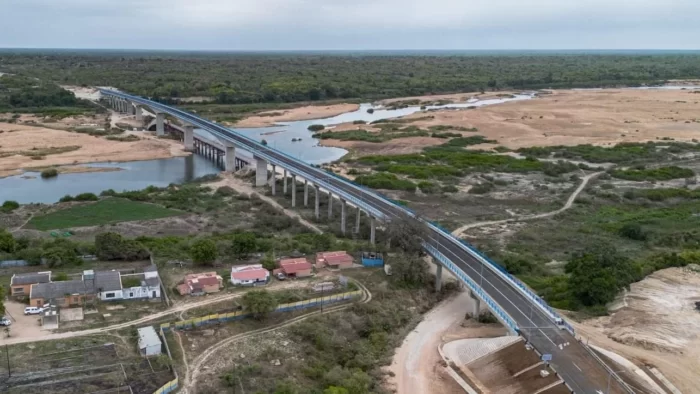
New bridge inaugurated in Mozambique
Betar has contributed to the success of the project, which is vital for the transportation of people and goods. Read more

