A conversation with Arqº Manuel Taínha
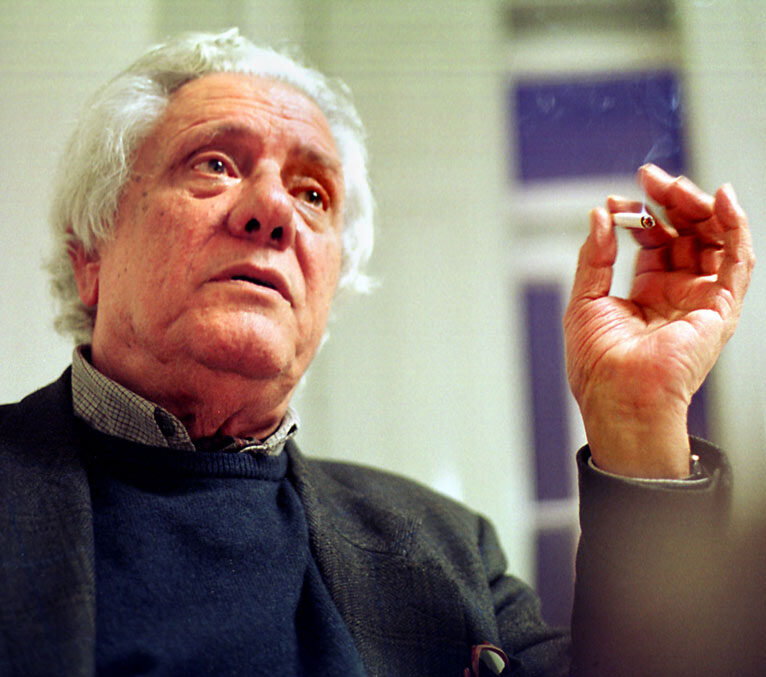
A conversation with Arqº Manuel Taínha
"I've never done anything just to show off, I like to recognize myself in the work I do and I recognize myself in all of it. I was the best I could be'
What would you say are the most important characteristics in your relationship with the engineers on your project team?
Experience tells me that group work is not a mere juxtaposition or sum of skills, knowledge and different personalities. It’s a prerequisite that each party can understand the problems and values that are at stake at any given time. For my part, I believe I have this ability, especially in relation to structural engineering, which is most closely linked to architecture. And I’ve been lucky enough to have met engineers throughout my life who accept dialogue with the greatest of ease and who know how to ‘roll up their sleeves’ when necessary. Of course, in the design process there must always be someone who never loses sight of the whole, which is the beginning and end of every project. And that someone is, of course, the architect who, as such, has to know how to reconcile the work of the engineering disciplines according to that same whole. And since I’m a guest here at Artes&Letras, I have to say that I’ve always found the best collaboration at BETAR; first with Mr. Veiga de Oliveira and then with Mr. José Pedro Venâncio. Good mates on the road.
And this understanding with civil engineers is fundamental…
Absolutely. This understanding, I would say, this complicity is one of the things that makes the act of designing a worthwhile and enjoyable act, even in adverse conditions. You’re always designing against something.
Alexandre Marques Pereira once said that Manuel Taínha is “one of the most complete architects in the history of Portuguese architecture”. Do you recognize yourself in this description?
I’d like to recognize myself in the picture Alexandre draws of me. I don’t hide it. But I don’t know. It doesn’t go without saying, however, that experiencing the world of architecture from the inside has never been a limitation for me. On the contrary, it has always opened me up to other and varied worlds. Permanently, irrevocably. That’s why I agree with Abel Salazar, the doctor, when he says that “a doctor who only cares about medicine will never be a good doctor”. Where you read doctor, you read architect. As for the results… that’s where I’ll always be the worst judge.
Is there a work of your life?
My life’s work will be all the work I’ve done. I’m always reluctant to choose one. It’s because, in this question, it’s me that’s at stake, not the work. And I don’t know myself very well, I know myself by clashing, agreeing or disagreeing, with reality, including the reality of the works I do. I don’t have enough discernment to fully answer your question. But I don’t think there’s anything wrong with that.
If you were doing it today, would you do your projects differently?
Of course I would. Because the circumstances in which each project takes place vary constantly. There was the case, for example, of the Professor Herculano de Carvalho school in Olivais, which was built 30-something years ago. When I was now hired to “rehabilitate” and “modernize” it, according to the Parque Escolar program, the general design of the school was perfectly up to date, because even then I saw the problem of secondary education through the prism through which it is seen today. Originally, the school had a central idea, well expressed architecturally, which should not be altered. And if there were any extensions, they were mostly in a separate and completely different building. Another case was the Pousada de Santa Bárbara in Oliveira do Hospital; a project drawn up in the 1950s that was put on the back burner by the government of the time [Oliveira Salazar]. After 10 years, it was taken out of the drawer to be executed and civilized, Mr. Ferreira da Cunha, from the Ministry of Public Works, asked me if I wanted to review the project, given that so many years had passed. I agreed and began to revise it, making changes here, there and then, until I realized that I was destroying the coherence of the project. So, I closed the dossier and decided that it would be realized as it was, with all the weaknesses it might have. And so, it was done. I’m sure that if it were done today, I’d do it differently, but it probably wouldn’t be any better.
This interview is part of Artes & Letras Magazine #17, February 2011.
Photo credit: Público
News & Interviews
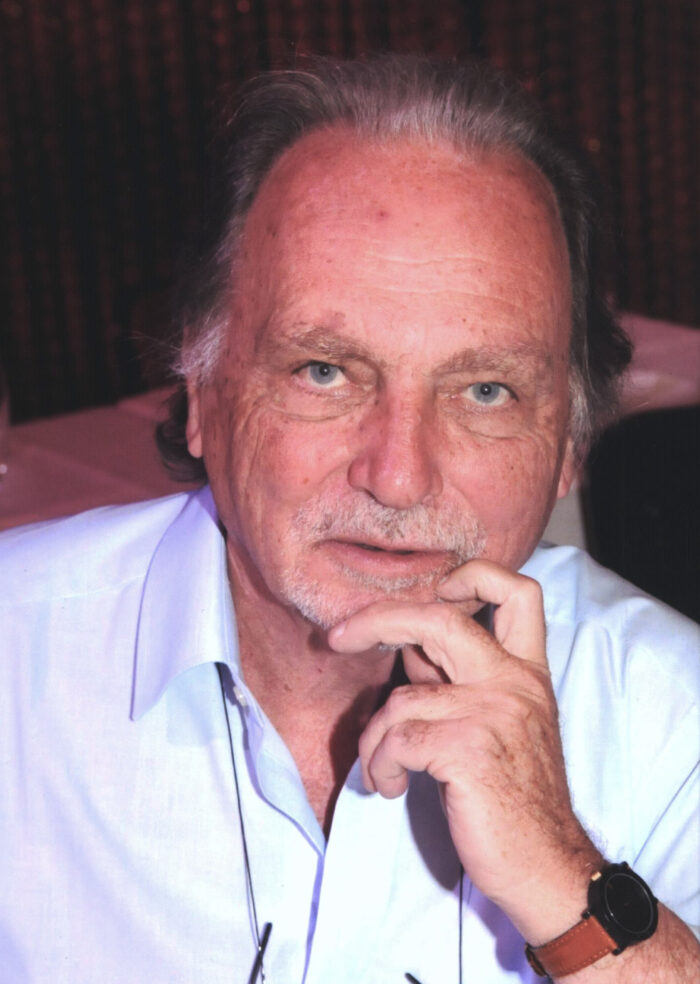
A conversation with Arch. Pedro Ferreira Pinto
'I am looking for an architecture with a minimalist aspect and without excesses of austerity that tries to respond to society's challenges. I try to introduce an idea of simplicity, elegance and culture. ’ Read more
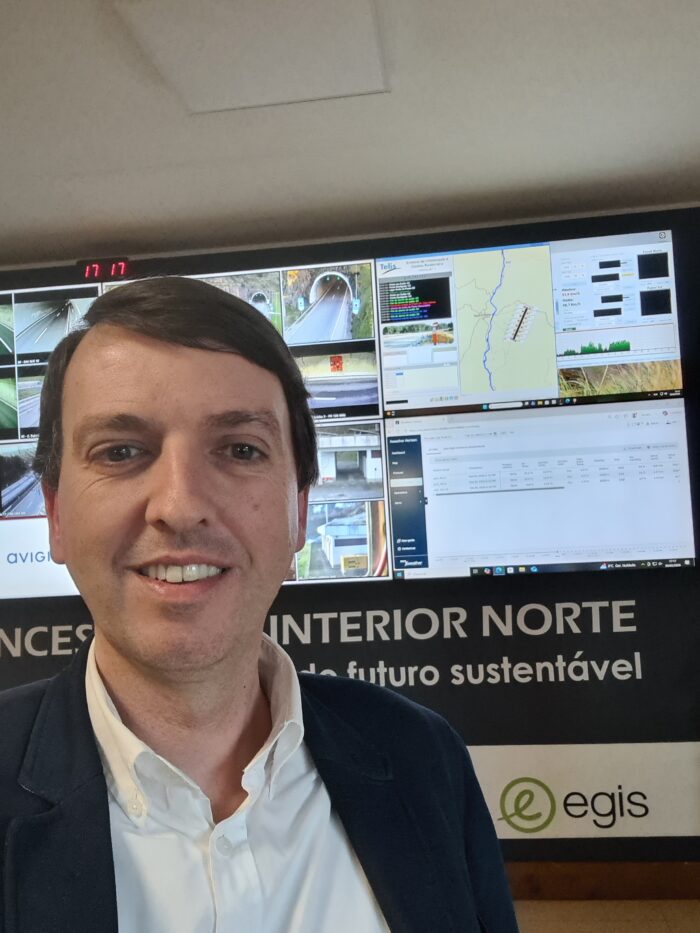
A conversation with Eng.º Paulo Barreto
'Although 2026 is shaping up to be a particularly extreme year in terms of weather conditions, we are constantly working to anticipate scenarios and strengthen the resilience of the infrastructure. (…) with the aim of ensuring the safety and continuity of service on the A24' Read more
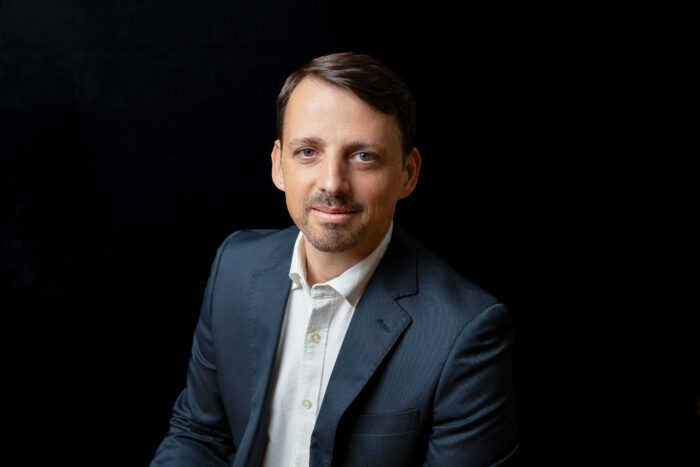
A conversation with Engº Hugo Neves
'Mozambique has immense potential but faces significant challenges. (...) Investment in basic infrastructure (...) is essential and can act as a lever to attract more foreign investment to attract more foreign investment' Read more

