A conversation with Eng.º Pedro Abegão
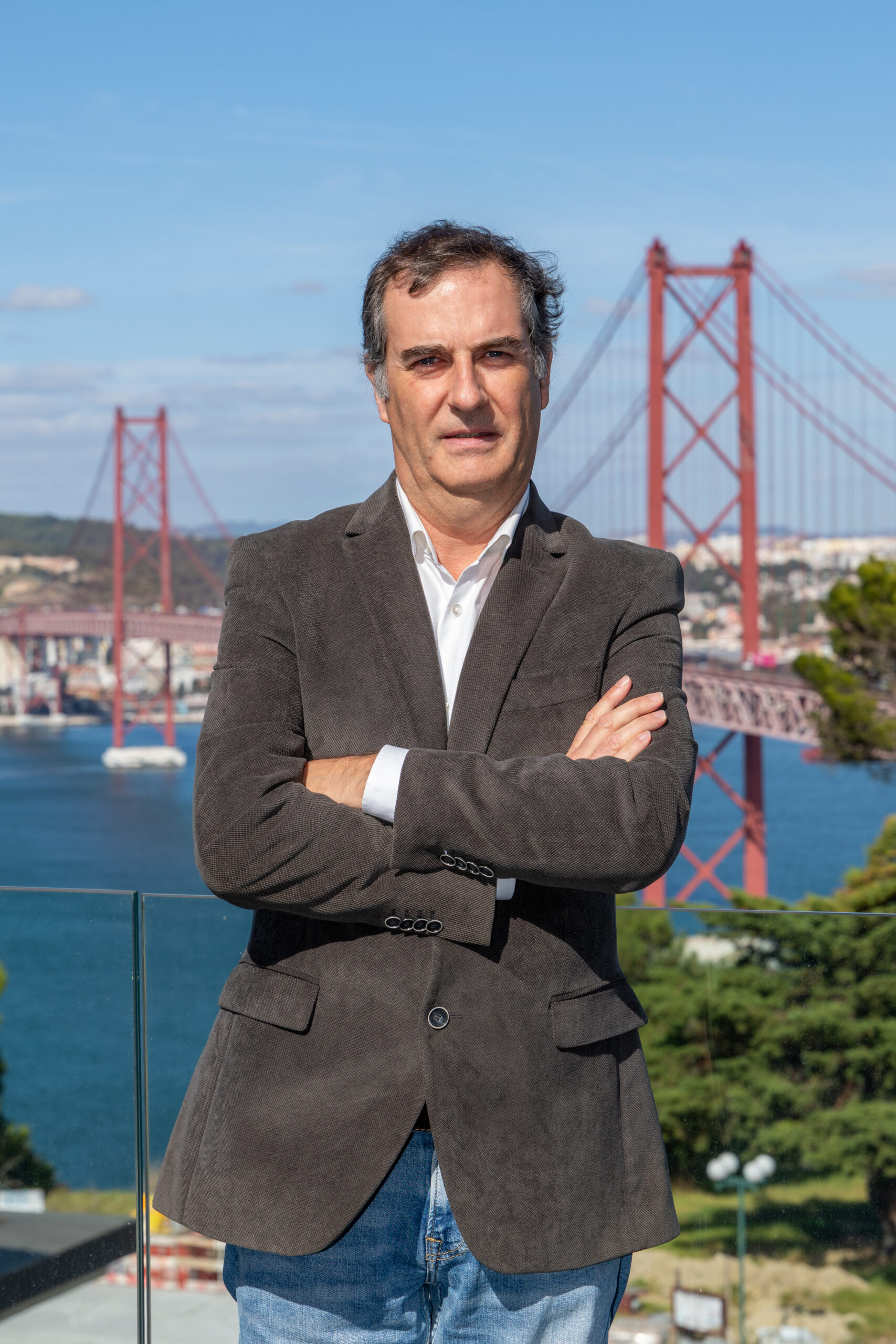
A conversation with Eng.º Pedro Abegão
'The 25 de Abril Bridge is a unique piece of infrastructure in Portugal (…) inspections provide insight into the condition of its structural elements (…) which is essential for ensuring the safety and durability of the structure'
You are the operational manager of 25 de Abril Bridge. What are your primary responsibilities?
My primary responsibilities include promoting, ensuring, and overseeing the inspection of the bridge, as well as guaranteeing the maintenance, preservation, improvement, or major repairs of all its structural elements—with the exception of those belonging to the railway domain (which fall under the purview of the railway division of Infraestruturas de Portugal, or IP) and those included in the road concession granted to Lusoponte (such as the road surface, signage, and lighting). Finally, I also assist, when required, in coordinating and managing the safety of both road and rail operations. If the 25 de Abril Bridge were a building, my role would be equivalent to that of a condominium manager.
The 25 de Abril Bridge is the only bridge in Portugal that undergoes daily maintenance. Tell us about this work and the safety procedures involved.
The 25 de Abril Bridge is a unique piece of infrastructure in Portugal, given its physical characteristics and dimensions, the fact that its management is shared among multiple entities, and its annual user volume, which exceeds one hundred million. Operational management focuses on fulfilling the responsibilities of IP (Infraestruturas de Portugal) regarding the foundations, piers, stiffening girders, suspension cables, and anchorages, as well as the components of the northern access viaduct. Daily tasks consist of inspections and routine maintenance, carried out by a 26-member multidisciplinary team under a contract awarded to the Institute for Welding and Quality (ISQ). While this is a daily undertaking, the specific tasks follow different schedules—occurring on a weekly, monthly, quarterly, semi-annual, or annual basis.
This category includes tasks such as restoring anti-corrosion protection, welding, electrical repairs, and so on. Periodically, special inspection and maintenance/preservation tasks are carried out; for example, underwater inspections of the piers located on the riverbed, which encompass bathymetric surveys, experimental determination of the forces acting on the suspender cables, and the maintenance of bridge bearings. Any issues that cannot be resolved through routine maintenance or preservation are escalated for major improvements, extensive repairs, or structural modifications.
In the daily operations of the 25 de Abril Bridge, adherence to safety procedures is mandatory. Crossing the roadways is strictly prohibited; personnel must use the designated lower-level side walkways. Entering “Risk Zone A” (where trains operate) or “Risk Zone C” (areas affected by the overhead catenary system) is forbidden unless the required safety measures have been implemented beforehand. Furthermore, the use of collective and personal protective equipment is compulsory. Any access to the bridge must be undertaken by at least two people; all entries and exits must be reported to the IP (Infraestruturas de Portugal) security control center. Additionally, should forecasts of rain or high winds materialize, work schedules are adjusted whenever possible.
Regarding underwater inspections, what is the importance of this type of monitoring in ensuring the safety and durability of infrastructure?
This type of inspection provides insight into the condition of structural elements and allows for the detection of any anomalies or damage requiring intervention; it is, therefore, essential for ensuring the safety and durability of the structure. Another important check, typically performed concurrently with the underwater inspection, is a bathymetric survey around the foundations. This reveals current dynamics and their impact on the riverbed topography, enabling the detection of potential scouring near the foundations that could jeopardize the stability and, ultimately, the very integrity of the structure.
For the last two editions, the public tenders issued by IP (Infraestruturas de Portugal) were won by BETAR. The scope of work included the preparation and planning of operations, coordination of the diving team, technical oversight and guidance of the inspections, processing and analysis of the collected data, assessment of the condition of the foundations and the surrounding area, and the proposal of any necessary corrective measures.
Historically, the results for the 25 de Abril Bridge have remained consistent, confirming the sound condition of the structures and the absence of any significant changes between inspections.
It also features a monitoring system, developed in partnership with LNEC (National Laboratory for Civil Engineering).
The structural monitoring system—designed and implemented by LNEC under a cooperation agreement—consists of a set of sensors intended to measure variations resulting from potential structural damage scenarios. These include accelerometers (for measuring vibrations), anemometers (for wind speed and direction), clinometers (for rotations), strain gauges (for measuring strain and stress in the steel), displacement transducers (for relative displacements), weigh-in-motion sensors (for measuring the weight of railway consists of), and thermometers (for monitoring steel temperature). Of note is the triaxial accelerometer, which can detect ground vibrations, such as those caused by a seismic event. All parameters are measured automatically, and the acquired data are subsequently analyzed.
This interview is an integral part of Artes&Letras magazine #194, november 2026
Partially automatic translation from portuguese: some expressions may differ from their actual meaning.
News & Interviews
A conversation with Arch. José Neves
‘One of the few certainties I have about architecture is that we should only destroy or replace what we can do better.’ Read more
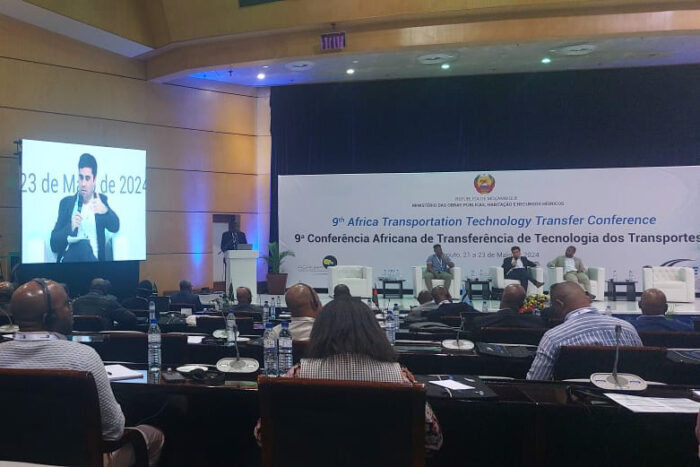
9th African Transport Technology Transfer Conference
Betar took part in the event with the theme ‘GOA - Reshaping Bridge Management with AI, 3D tools and BIM’ Read more

A conversation with Arch. Patrícia Barbas and Arch. Diogo Lopes
‘the dawn of new generations, with new methods of work and new forms of organization. This also results in a more diverse and plural professional attitude.’ Read more

